Mark the calendar
The big Brussels events
Twice the Grand-Place becomes a stage: every other August it disappears under a carpet of flowers, and every July the Ommegang brings Charles V back to town with 1,400 people in costume. What each one is, when it comes back, how to see it and what to know before you go.
Flower Carpet
| Next edition | Mid-August 2028 (every two years) |
|---|---|
| Last edition | Thursday 13 to Sunday 16 August 2026: 24th edition, guest of honour Japan (160 years of Belgian-Japanese diplomatic relations): Hokusai's The Great Wave off Kanagawa, reworked by the Japanese artist Hiro Sugiyama, in 750,000 dahlias of 19 colours (organiser's closing release). For the first time a second carpet, inspired by hops, lay in front of the Bourse. About 20,800 people saw it from the Town Hall balcony. |
| When in the day | Daytime and evening; light show after dark |
| Price | Free on the square; the balcony view is paid |
| Where | Grand-Place, Brussels |
| Organiser | Tapis de Fleurs de Bruxelles asbl |
| 🔗 | flowercarpet.brussels |
- 1,680 m²carpet surface (70 m × 24 m)
- 750,000dahlias in 2026, in 19 colours
- about 120volunteers laying the carpet
- 4days on show
- 20,800balcony visitors in 2026
- 1971year of the first carpet
What it is like
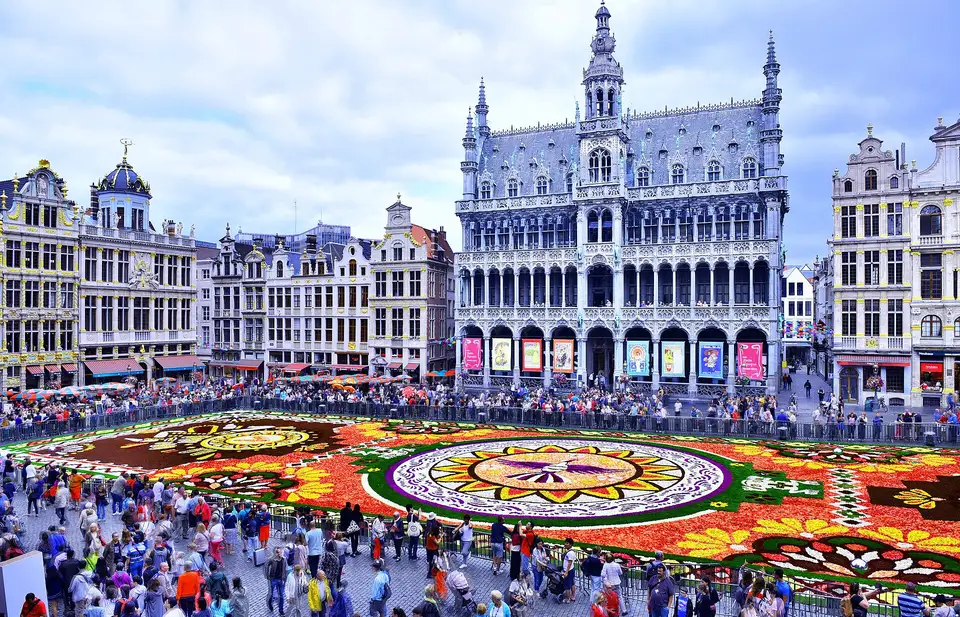
On the Thursday morning the square is a building site of crates and grass rolls. By noon about 120 volunteers have pressed hundreds of thousands of flower heads into a design 70 m long and 24 m wide, so tight that, the organisers say, the carpet makes its own microclimate. You smell it before you see it: cut flowers and damp turf in the middle of the old town.
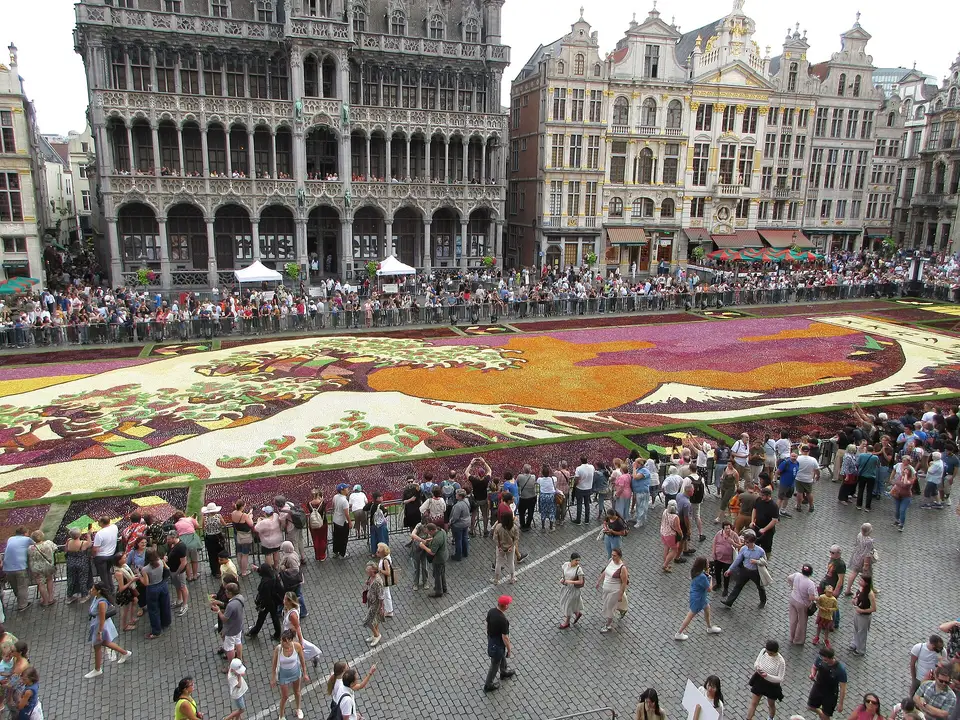
From the ground you see colour and texture, flower by flower, behind a low barrier. The whole drawing only appears from above: the Town Hall balcony gives you the wide view, with the gilded guildhalls on three sides. In 2026 that view was a Hokusai wave in 750,000 dahlias.
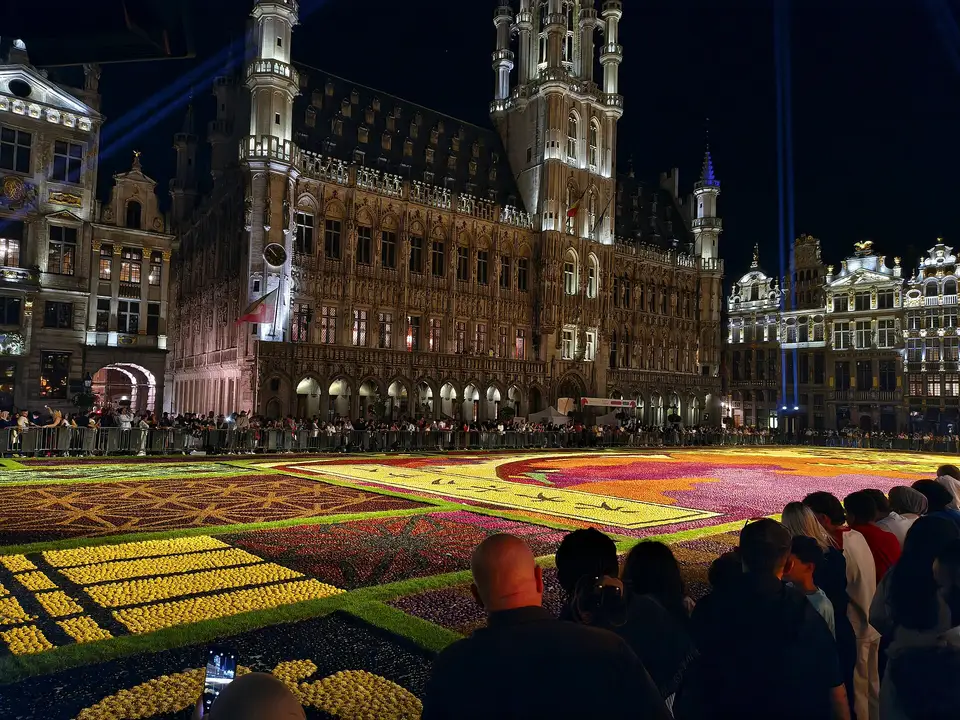
After dark the carpet is lit and a sound-and-light show plays on the facades. The square is free and open all day, but it is busy: in 2026 the balcony queue never let up in four days of heat, and 20,800 people went up.
Highlights
Watch the carpet being laid
Opening day (Thursday in 2026), from about 07:00 until about noon · Grand-Place
The square stays open while volunteers fill the drawing flower by flower. You see the pattern grow from bare stones to a finished carpet.
The view from the Town Hall balcony
Daytime, all four days · Town Hall (Hôtel de Ville), Grand-Place
The only place where you see the whole design at once. Tickets are sold at the Town Hall entrance; expect a queue.
Up close at ground level
All day; early morning is quietest · Grand-Place
Walk the barrier around the carpet to see how the flowers, grass and bark are packed. Free.
Sound-and-light show
21:45–23:00 in 2026 · Grand-Place
Every evening the carpet and the guildhall facades are lit to music.
The second carpet at the Bourse (2026)
13–16 August 2026 · Place de la Bourse
In 2026, for the first time, a smaller carpet inspired by hops (Belgium's brewing heritage) lay in front of the Bourse, a few minutes' walk away.
The mini carpet at Mini-Europe
Mini-Europe opening hours · Mini-Europe, Heysel
A 1:25 copy of the latest carpet stays at Mini-Europe for two years, until the next design: you can see the 2026 Great Wave there until 2028.
The programme
- Thursday from about 07:00 (2026) Volunteers start laying the flowers on the square; the aim in 2026 was to finish by noon.
- Thursday to Sunday, daytime Carpet on show, free to view from the square; balcony visits from the Town Hall.
- Every evening, 21:45–23:00 (2026) Sound-and-light show on the Grand-Place.
- Sunday 22:00 (2026) Last viewing; the carpet is cleared within hours.
Where to watch
Town Hall balcony
At the opening of the day, or in the last hours of the evening · Hôtel de Ville, Grand-Place, 1000 Brussels
The only full view of the design. Paid; queues all day in 2026.
Around the barrier on the square
Before 10:00 for space; after 21:45 for the lit carpet · Grand-Place, 1000 Brussels
Free, close enough to see single flowers. The corners in front of the guildhalls give the longest diagonal view.
Place de la Bourse (2026)
Any time · Place de la Bourse, 1000 Brussels
The smaller hops carpet of 2026, usually less crowded than the Grand-Place. Check whether 2028 repeats it.
Tickets
Seeing the carpet from the square is free. The view from the Town Hall balcony is paid: in 2026 tickets were sold on the day at the Flower Carpet reception desk at the Town Hall entrance (and through the organiser's online shop). Under-10s went free.
Tips
- Come on the first morning (Thursday in 2026) from about 07:00 to watch the volunteers lay the flowers; the square stays open.
- The balcony queue builds all day: go at opening time or in the evening, and keep cash or a card ready for the ticket desk at the Town Hall entrance.
- Under-10s went up to the balcony for free in 2026.
- Go back after dark: the carpet is lit and the sound-and-light show ran 21:45–23:00 in 2026.
- Mid-August can be hot: 2026 ran in a heatwave and the dahlias shrank in the sun. Bring water and a hat; there is no shade on the square.
- The carpet is behind a barrier: you cannot walk on it. Stand at a corner for the longest diagonal view.
- Can't come? The City of Brussels runs a free webcam on the square during the event.
- Missed it? A 1:25 copy of the 2026 carpet stays at Mini-Europe until 2028.
- Walk from metro De Brouckère (600 m) rather than driving: the nearest car parks (Écuyer, Grand-Place) fill up first.
- Check whether 2028 has a second carpet at the Bourse again: in 2026 it was quieter than the Grand-Place.
Good to know
| Getting there | Metro 1 and 5 to De Brouckère (about 600 m on foot), tram 92 and 93 to Royale (about 760 m), bus 33, 48 and 95 to Grand-Place. Car parks: Écuyer (258 m), Grand-Place (260 m), Monnaie (378 m), Albertina (382 m). |
|---|---|
| Closures | The Grand-Place itself is the venue: the carpet covers the centre and you walk around it behind barriers. |
| Crowds | Busy all four days; the organisers speak of tens of thousands of visitors on the square and 20,800 went up to the balcony in 2026. |
| Weather | Mid-August; 2026 ran in a heatwave. If it is wet, the turf between the motifs can grow 4–5 cm in three days, the organisers say. |
| Accessibility | The square is cobbled. We found no official information on step-free access to the Town Hall balcony. |
| With children | Free on the square; in 2026 the balcony was free for children under 10. |
| Rules | You cannot step on the carpet. No other rules published. |
History
- 1971 First Flower Carpet on the Grand-Place, by the landscape architect Etienne Stautemas, who had been making begonia carpets since the early 1950s. His team went on to make more than 180 carpets, as far away as Buenos Aires and Columbus, Ohio.
- 1986 The non-profit Tapis de Fleurs de Bruxelles is founded; since then the carpet returns every two years. That year's design was the city's coat of arms, St Michael slaying the devil.
- 2000 The Grand-Place becomes a UNESCO World Heritage Site. That year's carpet imitated an inlaid table under a Brussels lace runner, in begonias.
- 2013 Flowertime, an indoor flower show in the Town Hall, starts in the odd years between carpets.
- 2016 The 20th carpet celebrates 150 years of Belgian-Japanese friendship.
- 2020 The carpet is listed as intangible cultural heritage of the Brussels Region (1 October 2020). The list of editions skips from 2018 to 2022.
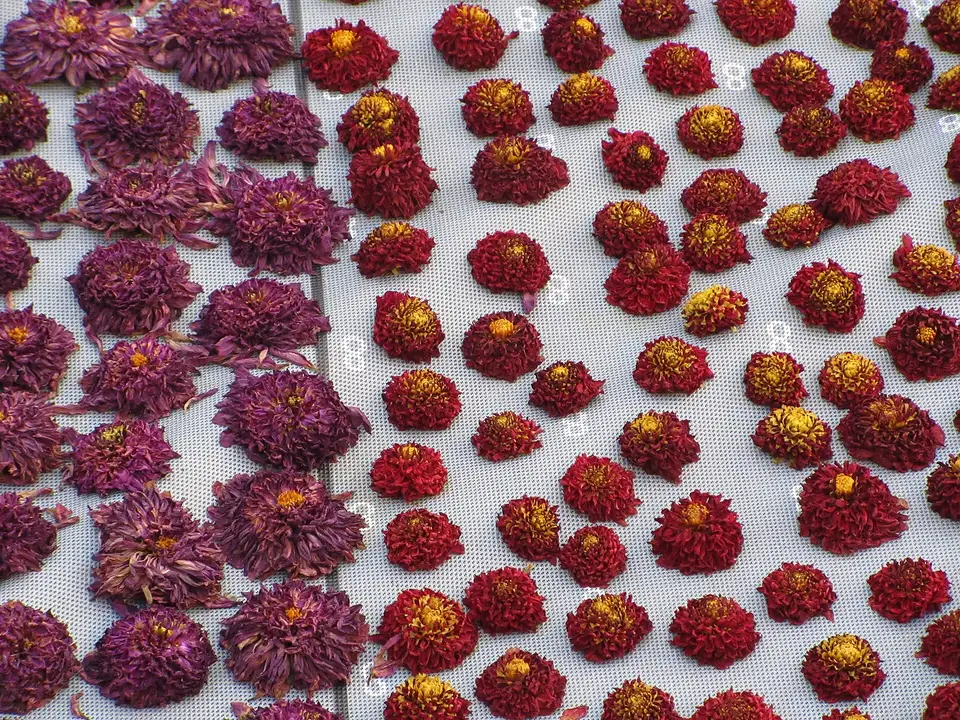
- 2022–2024 After 22 editions of begonias, which became rare in Belgian nurseries, the carpet switches to dahlias, grown with the Bloemencorso Loenhout association. 2024's design was by the Liège street artist Whoups.
- 2026 Japan returns as guest of honour: Hokusai's Great Wave in 750,000 dahlias, plus a first second carpet at the Bourse.
More photos
Questions
When is the next Flower Carpet?
In 2028, around the weekend of 15 August. The exact dates are not announced yet. The 2026 carpet was on show from 13 to 16 August.
Is the Flower Carpet free?
Yes, looking at it from the Grand-Place is free. The view from the Town Hall balcony is paid: €9 in 2026, free for children under 10.
How many flowers are in the carpet?
The 2026 carpet had 750,000 dahlias in 19 colours on 1,680 m², according to the organisers.
What was the 2026 theme?
Japan, for 160 years of Belgian-Japanese relations: Hokusai's Great Wave off Kanagawa, reworked by the artist Hiro Sugiyama.
How long does it take to make?
About 120 volunteers lay it in one morning; in 2026 they started around 07:00 and aimed to finish by noon.
Is there a Flower Carpet in 2027?
No. The carpet is held in even years. In odd years the organisers hold Flowertime, a flower show inside the Town Hall.
When is the light show?
Every evening of the carpet; in 2026 from 21:45 to 23:00.
Why dahlias and not begonias?
Begonias made the first 22 carpets, but they became rare in Belgian nurseries; the carpet now uses dahlias grown with the Bloemencorso Loenhout association.
Nearby: Grand-Place · Manneken Pis · Galeries Royales Saint-Hubert · Mini-Europe
Ommegang
| Next edition | Early July 2027, two evenings |
|---|---|
| Last edition | Wednesday 1 and Friday 3 July 2026 (Renaissance village and market at the Sablon 1–4 July): Country of honour Japan (160 years of Belgian-Japanese relations), with a Japanese pre-show at 20:10. Herald: Bart Van Loo; cartoonist: Fred Jannin; master of ceremonies: Thomas De Bergeyck. First year of the new co-directors Francis Mannaert and Thierry Bourgois, after Giles Daoust's 20 years. |
| When in the day | Evening, show from about 21:00 |
| Price | Grandstand seats from €59 (2026); the Sablon and the streets are free |
| Where | Grand-Place and Sablon, Brussels |
| Organiser | Ommegang Brussels Events |
| 🔗 | ommegang.be |
- 1,400costumed participants
- 47folkloric groups
- 3,500 mof procession
- 120minutes of show
- 1549the procession it recreates
- 2019UNESCO intangible heritage
What it is like
From noon the Sablon turns into a 16th-century village: blacksmiths, barbers and surgeons at work, a Renaissance market, and knights jousting on horseback. In the early evening the two crossbow guilds march to the Sablon church and shoot for the Golden Arrow, and Charles V and his son arrive to start the procession.
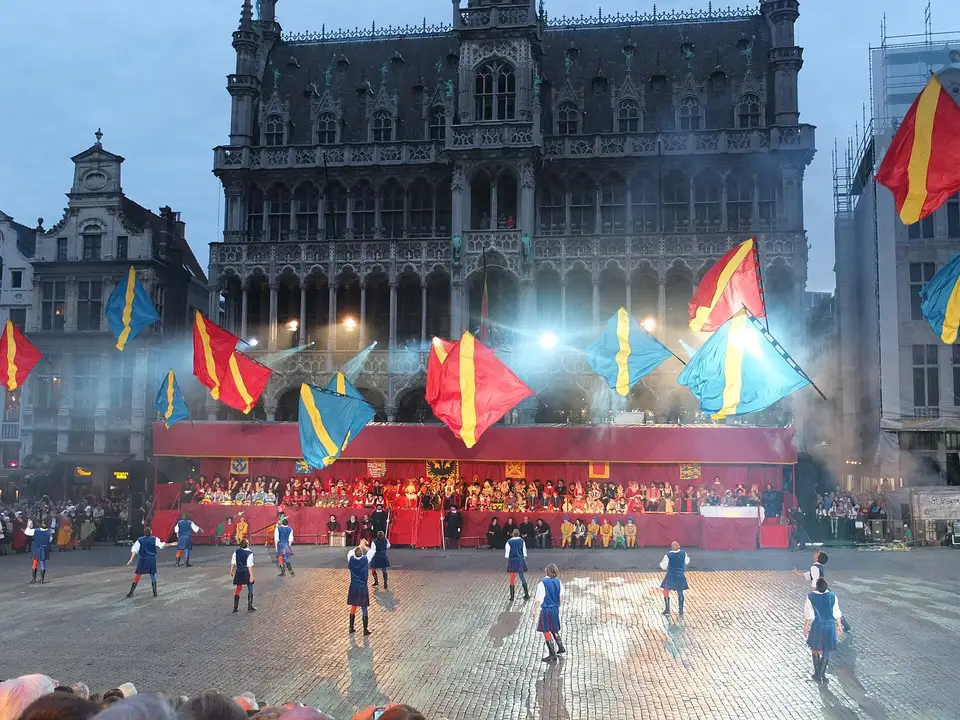
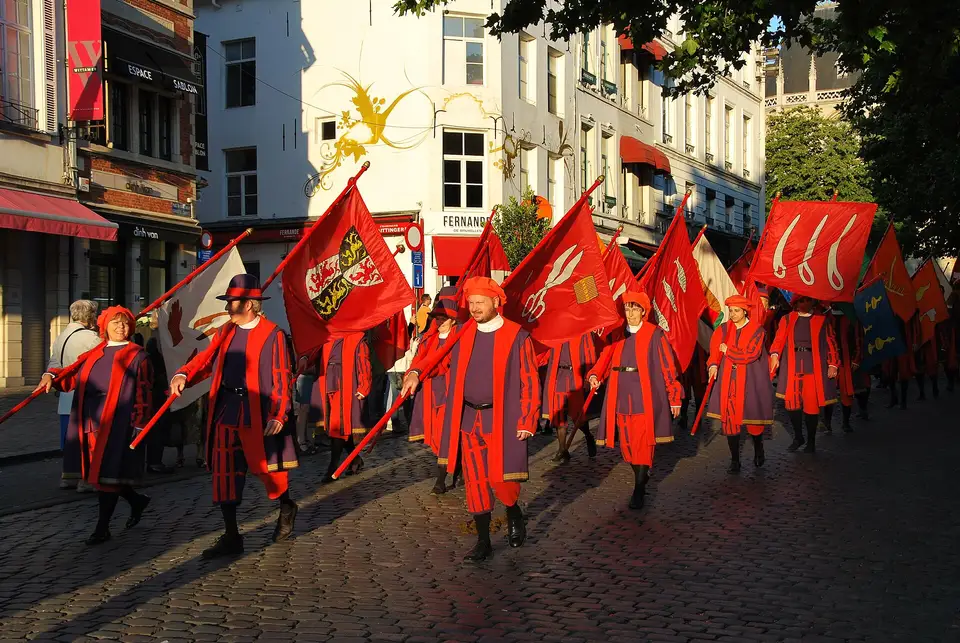
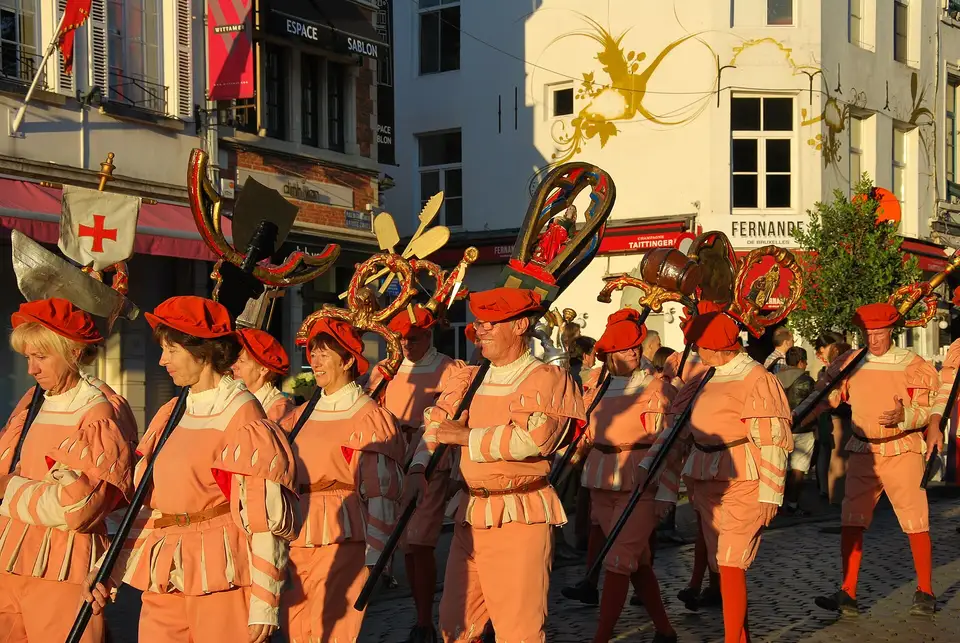
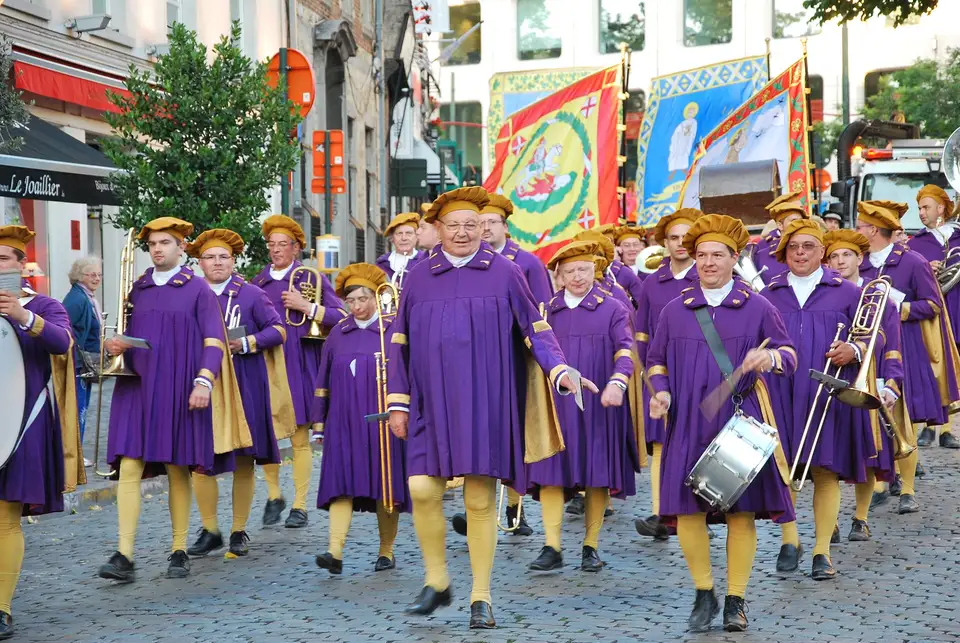
Then the parade heads down to the Grand-Place: flag throwers, stilt walkers, horses, giants and floats, about 1,400 participants and 47 folkloric groups over 3.5 km of procession. Halfway, the Brewers' Giant comes out of the Ommegang brewery in Rue de la Montagne and climbs onto the beer float.
On the Grand-Place the court takes its seats in front of the Maison du Roi, the façades light up, music and fire effects follow each group, and a giant screen shows the procession arriving. The show lasts about two hours and goes ahead in the rain. Seats on the stands are paid; the Sablon festivities are free.
Highlights
Renaissance village and market
From 12:00, all four days (until 21:30 in 2026) · Place du Grand Sablon
Craftspeople show old trades; floats and giants are on display between the stalls. Free.
Jousting and knights' combat
Afternoons, 12:00–20:00 window in 2026 · Place du Grand Sablon
Knights on foot and on horseback. Free.
Crossbow competition
19:05 march, 19:15 shooting (2026) · Esplanade of Notre-Dame du Sablon
The two Crossbowmen's Oaths march to the church and shoot for the Golden Arrow, as the guild did when the legend began.
Charles V arrives
20:10 (2026) · Sablon
The emperor and the Infante Philip arrive at the Sablon and the procession forms behind them.
The procession through the streets
20:30–21:15 (2026) · Royal Park, Rue de la Régence, Sablon, towards the Grand-Place
Free to watch from the pavement. The pre-procession leaves the Royal Park and the historical procession leaves the Sablon for the Grand-Place.
The Brewers' Giant
21:15 (2026) · Rue de la Montagne 4
The giant comes out of the Ommegang brewery and is set on the barrel of the beer float.
The show on the Grand-Place
From about 20:45–21:00, about two hours (2026) · Grand-Place
The groups parade before Charles V's stage in front of the Maison du Roi, with light, music and fire effects; English, French and Dutch presenters.
The programme
- 12:00 (1–4 July 2026) Renaissance village, market and jousting open at the Sablon.
- 19:05 (show days, 2026) The two Crossbowmen's Oaths march to the esplanade of Notre-Dame du Sablon.
- 19:15 Crossbow competition and the Golden Arrow.
- 19:30 Seating opens on the Grand-Place stands.
- 20:10 Charles V and the Infante arrive at the Sablon; in 2026 also the Japanese pre-show on the Grand-Place.
- 20:30 Pre-procession leaves the Royal Park via Place des Palais, Rue de la Régence and Rue Bodenbroek.
- 20:40 Historical procession leaves the Sablon for the Grand-Place.
- 21:00–21:15 Procession passes the Cathedral of St Michael and St Gudula.
- 21:15 Brewers' Giant leaves the Ommegang brewery, Rue de la Montagne 4.
- From about 21:00 Show on the Grand-Place, about 120 minutes.
The route
| Start | Royal Park (pre-procession, 20:30) and Place du Grand Sablon (historical procession, 20:40) |
|---|---|
| Finish | Grand-Place |
| Streets | Place des Palais → Rue de la Régence → Rue Bodenbroek → Place du Grand Sablon → (past the Cathedral of St Michael and St Gudula, 21:00–21:15) → Rue de la Montagne → Grand-Place |
Where to watch
Stands on the Grand-Place
Seating opens at 19:30; access through the street printed on your ticket · Grand-Place, 1000 Brussels
The only way to see the full show. Stand B faces the Town Hall; stand H faces the House of the Dukes of Brabant, with covered VIP seats. Charles V's stage is in front of the Maison du Roi.
Place du Grand Sablon
Before 19:00 for a spot by the church · Place du Grand Sablon, 1000 Brussels
Free: crossbow competition, Charles V's arrival and the start of the procession, close up.
Rue de la Montagne
Before 21:00 · Rue de la Montagne 4, 1000 Brussels
Free: watch the procession pass and the Brewers' Giant come out of the Ommegang brewery.
Royal Park / Rue de la Régence
20:15 · Place des Palais, 1000 Brussels
Free: the pre-procession leaves the park at 20:30 and walks past Place des Palais and down Rue de la Régence; less crowded than the Sablon.
Tickets
The stands on the Grand-Place are paid; everything at the Sablon (village, market, jousting, crossbow competition) and the procession through the streets are free.
Tips
- Seating opens at 19:30 and you enter through the street printed on your ticket: check it before you go.
- No umbrellas on the stands, even in rain (the show goes ahead): bring a waterproof jacket.
- No ticket? Watch the crossbow competition (19:15) and Charles V's arrival (20:10) at the Sablon, then follow the procession; all free.
- Rue de la Montagne is a good free spot: at 21:15 the Brewers' Giant comes out of the Ommegang brewery there.
- Spend the afternoon at the Renaissance village and market at the Sablon (from 12:00): the floats and giants are on display there.
- The show runs about two hours and ends late: plan your way back after 23:00.
- Buy the €5 bilingual programme on the evening if you want to follow who is who.
- There is a giant screen on the Grand-Place that shows the procession arriving.
- In 2026 the show had an English presenter (Bert Kruismans) next to the French and Dutch ones.
- Combine with Notre-Dame du Sablon, where the legend began in 1348.
Good to know
| Getting there | The festivities are in the old centre: walk between the Sablon and the Grand-Place. The organiser publishes a traffic plan for the show evenings (Plan-Circulation map on ommegang.be). |
|---|---|
| Closures | Streets between the Royal Park, the Sablon and the Grand-Place close for the procession; see the organiser's traffic map. |
| Crowds | Thousands of spectators on the stands each evening; the Sablon is busy around the crossbow competition and the start of the procession. |
| Weather | Early July evenings; the show goes ahead in the rain. |
| Accessibility | No official information found on wheelchair places on the stands. |
| With children | The Sablon village, market and jousting are free and suit children; the show ends late. |
| Rules | No umbrellas on the stands. |
Eat and drink
Ommegang beer
The pageant's own blond beer, brewed by Haacht: 8%, three kinds of hops, citrus aroma and a dry, bitter finish.
History
- 1348 Beatrice Soetkens, after a vision, takes a wooden statue of the Virgin from Antwerp and sails it to Brussels; the crossbowmen's guild receives it at the Sablon. An annual procession, the Ommegang ('walking round'), is founded, and the chapel grows into the Gothic church of Notre-Dame du Sablon.
- 1549 On 2 June the city puts on its most splendid Ommegang for Charles V, who has come to present his son, the future Philip II, to the Low Countries. Today's pageant recreates that evening.
- 18th century The tradition declines.
- 1928–1930 The procession is recreated from written accounts of 1549; it has run since 1930. The descendants of noble families still play the court.
- 2019 On 11 December UNESCO adds the Ommegang to its Representative List of the Intangible Cultural Heritage of Humanity.
- 2025 The Ommegang performs at the World Expo in Osaka, which led to Japan being the country of honour in 2026.
- 2026 Giles Daoust hands over after 20 years as director to the duo Francis Mannaert and Thierry Bourgois.
More photos
Questions
When is the Ommegang in 2027?
On two evenings in early July. The 2027 dates were not announced when we checked (October 2026); 2026 was on Wednesday 1 and Friday 3 July.
Is the Ommegang free?
The Renaissance village, market, jousting, crossbow competition and the procession through the streets are free. Seats for the show on the Grand-Place cost €59–€89 (2026).
Can you see the Ommegang without a ticket?
Yes: watch the procession at the Sablon and along the route. The show on the Grand-Place itself is for ticket holders on the stands.
What time does the Ommegang start?
In 2026: crossbow competition 19:15, procession from 20:30–20:40, show on the Grand-Place from about 21:00 for about two hours. Seating opens at 19:30.
What does the Ommegang commemorate?
The procession of 2 June 1549 in honour of Charles V and his son Philip; the procession itself goes back to a 1348 legend about a statue of the Virgin brought to the Sablon.
Where do I buy tickets?
Through Ticketmaster, linked from ommegang.be.
What happens if it rains?
The show goes ahead; umbrellas are not allowed on the stands, so bring waterproof clothing.
Is the Ommegang a UNESCO tradition?
Yes, it was added to UNESCO's list of the Intangible Cultural Heritage of Humanity on 11 December 2019.
Nearby: Grand-Place · Notre-Dame du Sablon · Cathedral of St Michael and St Gudula · Coudenberg Palace · Mont des Arts Garden & Viewpoint · Galeries Royales Saint-Hubert